
'From data on enquiries, we can build what we call a data lake or a data warehouse where data is classified into various cohorts and then we use AI and ML tools to predict demand down the line.'

AI-driven and deepfake-enabled cyberattacks are anticipated to become increasingly prevalent in 2025 with sectors like healthcare and finance most prone targets, according to a recent report. The India Cyber Threat Report 2025 by the Data Security Council of India (DSCI) and Seqrite, spotlighted the evolving tactics of cybercriminals and the rise of AI-driven attacks as a major concern. "Artificial Intelligence (AI) will be used to develop highly sophisticated phishing campaigns utilising deepfake technology and personalised attack vectors, making them harder to detect.

With intermittent disruptions in the supply chain of raw materials from China, the Indian pharma industry has braced itself with bigger inventory. Even smaller drug makers are now carrying a month of buffer stock of key raw materials, said industry insiders. The lockdown in various Chinese provinces, including Shanghai, is likely to delay shipments by two weeks to a month, said domestic players. Shipments are critical for the Indian drug industry, which imports 70 per cent of its raw material from China.

Since March 2020, WPI food inflation rate continued to fall but the CPI-food inflation rose, signaling a breakdown in supply chain from the mandis to the final household.
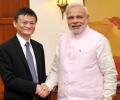
Alibaba's pervasive economic and social influence in China is seen as a threat to the authority of the Chinese Communist party, notes Shyam Saran.

In India, fast-moving consumer goods (FMCG) majors continue to hold sway, with incumbent brands cornering 65 per cent of the market share, shows a Bain & Company report. While identifying the continued preference of Indians for incumbent brands, the report says that the dominance of general trade in the country has allowed national brands to maintain their supremacy. The low penetration of e-commerce in the country has also helped large brands.

The presence of an engine maintenance, repair, and overhaul (MRO) facility in India could have prevented Go First airline from going "belly up", as sending engines abroad for servicing is not an efficient way to operate a carrier, Piyush Srivastava, senior economic advisor, Ministry of Civil Aviation, said in a statement on Tuesday. On May 3, Go First suspended its flights and filed for insolvency, squarely blaming engine manufacturer Pratt & Whitney (PW) for its cash crunch. The airline claimed that about half of its 54 aircraft were grounded on May 3 due to a delay in the supply of engines by the US-based company. PW has denied the charges.
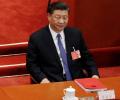
The just-concluded plenary session of the ruling Communist Party of China (CPC), headed by Xi, adopted his proposals for the formulation of the 14th Five-Year Plan (2021-2025) for National Economic and Social Development and the Long-Range Objectives Through the Year 2035.

Indian airline Go First is considering legal action against Pratt and Whitney (PW) for failing to provide compensation after March 2020 for planes grounded due to engine supply delays, sources said on Thursday. About 90 per cent of the airline's fleet of aircraft uses PW engines. About 24 of the airline's 55 planes are grounded due to delays in engine supply by PW.

End users should take the plunge despite higher home loan rates as these tend to be cyclical.

Prime Minister Narendra Modi on Thursday called for reforming the World Health Organisation and streamlining its approval process for vaccines and therapeutics, and favoured making flexible the WTO's rules relating to trade-related aspects of intellectual property rights.

To those who ask, "Is all this really worth it? Why can't domestic demand fill the gap?", it is important to remind them that only 13 economies since the Second World War have grown at 7 per cent or more for 25 years -- like India needs to. They all had one thing in common: Strong export growth underpinned by strong global engagement, explains Sajjid Z Chinoy.

Replying to a question on the recent spate of protests and riots, Coca-Cola's Global Chairman and Chief Executive Officer James Quincey said, "If there are disruptions in the functioning of a society, there will be some degree of problems for all businesses." "India is a vibrant democracy and it needs to work out what is going on. It is hoped that things get worked out in an appropriate democratic manner," he added.

With all the brouhaha over GST, and (often) a limited understanding of the long-term forces shaping India's logistics sector, companies seem to have omitted factoring in some underlying trends that could shape supply chain excellence, says Neelesh Mundra.

Withdrawing a blanket ban on overseas shipments of non-basmati white rice, the government on Saturday imposed a floor price of $490 per tonne and exempted the commodity from export duty. Exports of non-basmati white rice have been banned since July 20, 2023 to boost domestic supply. "The export policy for non-basmati white rice (semi-milled or wholly milled rice, whether or not polished or gazed) ...is amended from prohibited to free, subject to MEP (minimum export price) of $490 per tonne with immediate effect and until further orders," the directorate general of foreign trade (DGFT) said in a notification.

OSAT majors have concerns about India's ability to provide a stable, predictable, and lasting policy environment for years to come, which is key for making a decision in a capital-intensive business.

Asia's richest man, Mukesh Ambani, signed off an address to employees last week by assuring them that 2024 would be better than 2023 for both Reliance Industries and India. Ambani isn't an exception. Promoters and their representatives from several other conglomerates have expressed similar optimism.

Prime Minister Narendra Modi on Sunday called for a global framework for ethical use of Artificial Intelligence (AI) as he flagged concerns surrounding bias in such modern technologies and their impact on the society. Days ahead of the G20 Summit, the prime minister also made a strong case for developing an integrated approach to deal with issues concerning cryptocurrencies. Modi, addressing B20 Summit India 2023 organised by CII, said India is preparing a global framework for Green Credit and urged industry leaders to adopt life and businesses with emphasis on planet positive actions.

'The intensity and frequency of heatwaves will be much higher than in previous years over Punjab, Haryana, Rajasthan, Gujarat, Madhya Pradesh and Odisha.'

There is immense pressure on Biyani to go ahead with the RIL offer after FRL defaulted on its interest payments of Rs 100 crore on July 22.

In a first, the Centre will start selling tomatoes at discounted rates in retail markets in the national capital and few other cities from Friday to provide relief to the consumers as the price of the kitchen staple is ruling high at over Rs 200 per kilogram in some parts of the country.

'We carry 6.5 billion passengers every year. We have crossed seven billion this year, and are targeting 10 billion by 2030.'
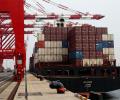
Container prices have shot up by up to 300 per cent in the past one month owing to geopolitical tensions between Israel and Iran following the former's attack on Hamas, causing shortages and pushing consumer durables companies to increase prices. Companies have planned increases but some are yet to decide on the extent of the increase.

Even as most of its large-cap pharmaceutical peers have struggled to stay above water on the returns front, Zydus Lifesciences has been one of the big outperformers within the sector over the past year with a return of over 30 per cent. The gains have come on the back of multiple triggers such as the scaling up of new product launches in the US market, clearance for its Moraiya (Gujarat) facility and steady performance in the domestic market. Though it has been the top pharma gainer in the 2022-23 financial year (FY23), brokerages continue to maintain their 'buy' stance, given the strong visibility in the US market.

'The private sector believes that some enablers in labour-intensive sectors like apparel, toys, tourism, and media retail, can unlock a lot of jobs.'

India must integrate more with East Asia by getting into regional trade arrangements, lower its tariff walls, and improve the quality of its workforce, suggests T N Ninan.

According to the survey report, the government's move to earmark Rs 76,000 crore outlay for semiconductors and display manufacturing segment will aid their production in the country. The survey said that government intervention to boost semiconductors and display manufacturing ecosystem in the country has come at a time when the global economy is facing acute shortage of semiconductors due to severe disruptions in supply chains.

Modi called business communities and governments to work together to ensure usage of ethical AI as "we have to sense the potential disruptions in different sectors. This problem has to be solved under the global framework."

A year after a Hamas attack against Israel on October 7 and the ensuing Israeli invasion of the Gaza Strip, India's trade with most West Asian countries has largely escaped any major disruption, except with countries like Israel, Lebanon, and Jordan. However, repeated flare-ups of geopolitical tensions in the region continue to drive up shipping and logistics costs.

Amazon has reclaimed the top spot as the world's most valuable brand despite its brand value falling 15 per cent this year from $350.3 billion to $299.3 billion, said a new report. According to brand valuation consultancy Brand Finance's report, "Global 500 2023", while Amazon is back at No 1, its brand value has fallen by over $50 billion this year, with its rating slipping from AAA+ to AAA. This is as consumers evaluate it more harshly in the post-pandemic world. Brand Finance's research has found that perception of customer service at Amazon has fallen - at the same time as delivery times have lengthened.

With just a month left in this financial year, electric two-wheeler sales, so far, are at just 62 per cent of the ambitious target of 1 million units set for 2022-23 by the NITI Aayog. According to VAHAN data, compiled by the Society of Manufacturers of Electric Vehicles (SMEV), 620,006 units of electric two-wheelers were sold across the country in FY23 until February 21. Though the industry may miss the 1-million target, sales in FY23 are already up 146 per cent from 249,621 units sold in FY22.

'The policies announced by his administration are implemented faster.'

Released on Wednesday, the report shows that 81 per cent of men and 72 per cent of women in India owned a mobile phone as of 2022, translating to a gender gap of 11 per cent. The numbers drop steeply in terms of mobile internet adoption. While 52 per cent of Indian men use mobile internet, women are way behind, with only 31 per cent of them accessing mobile internet, the report pointed out.
The exclusive club that dominates the global semiconductor fab scenario is about to get a new member. Taiwan, South Korea, and China control nearly 70 per cent of the global capacity. SEMI, the global industry body for semiconductor and electronics design and manufacturing, projects all fabs collectively will churn out 30 million wafers a month this year.

While two bodies were recovered on Wednesday, the death toll climbed to four on Thursday after the recovery of two more bodies from the Indira Priyadarshini Hydroelectric project site in Kangra district.

As Delhi hospitals faced a severe oxygen crisis for the third consecutive day, the DDMA roped in three senior bureaucrats on Thursday to ensure a smooth movement of tankers and facilitate oxygen supply to the needy establishments, and directed the police to provide the security logistics from the manufacturers' sites to various health facilities in the city.

'If attacks escalate, there is a risk the Suez Canal may be closed.'

Addressing an event in New Delhi, Gen Pande also said the recent global developments have underscored that the security of the nation can neither be outsourced nor be dependent on the largesse of others.
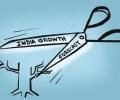
The International Monetary Fund (IMF) on Tuesday lowered India's economic growth projection for the current fiscal to 5.9 per cent from 6.1 per cent earlier. Yet India will continue to be the fastest-growing economy in the world. In its annual World Economic Outlook, IMF also lowered the forecast for 2024-25 fiscal (April 2024 to March 2025) to 6.3 per cent from the 6.8 per cent it had predicted in January this year. The growth rate of 5.9 per cent in the 2023-24 fiscal compares to an estimated 6.8 per cent in the previous year.
ITC has extensively reset its strategy and will explore opportunities to craft disruptive business models to set up structural drivers helmed by digital and sustainability for its next horizon of growth and make the company future-ready, chairman Sanjiv Puri said on Wednesday. The company is pursuing an accelerated journey to build a dynamic utureTech' enterprise by investing in cutting-edge digital technologies to shape a new paradigm of competitiveness, create innovative business models and tap newer opportunities, he said while addressing shareholders at ITC's virtual annual general meeting. As part of the next horizon vision, the company is "proactively exploring inorganic opportunities" even as it has shrunk "business segments that were incongruent to our growth aspirations, such as the Lifestyle Retailing Business" while the existing growth platforms comprising megabrands will be scaled up and fortified.
